AI integration that answers from your own data.
Our AI integration services connect AI to the documents, databases and tools you already use, so it gives answers you can check and takes real work off your team, inside your product or behind the scenes of your business.
Senior engineers build every project, and we measure how well the AI performs on your real examples before it goes live.


For teams with real data and a clear job for AI.
Most of the AI work we take on starts in one of three places.
Your team answers the same questions all day
Support, sales or operations looking up the same policies, orders and documents. We give them, or your customers, an assistant that answers from your own sources and shows where each answer came from.
You want AI inside the product you sell
A feature your customers will value: reading what they upload, drafting for them, searching in plain words. We build it into your product so it feels native, not bolted on.
A manual step is holding up your pipeline
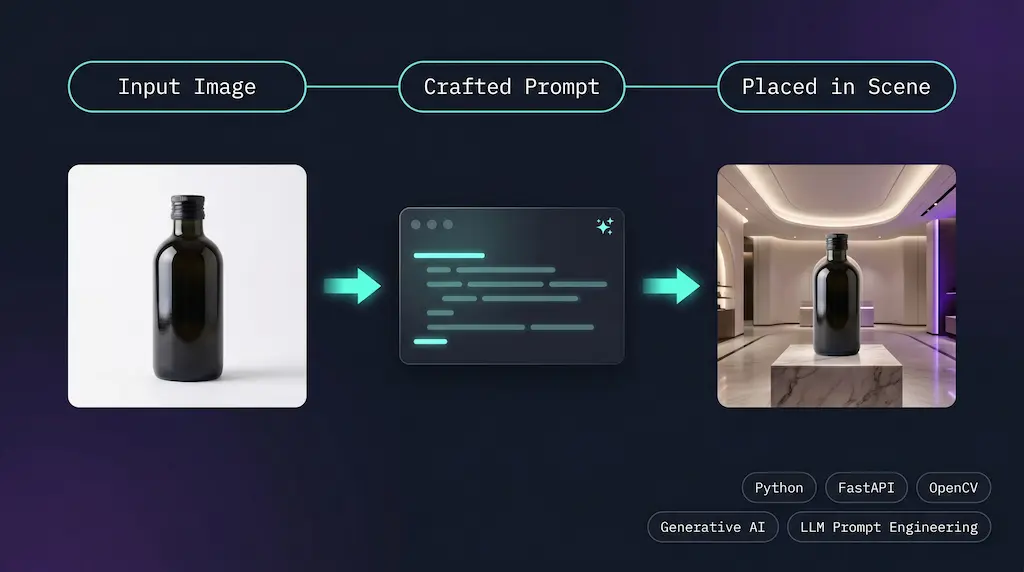
Work that needs judgment, so plain automation can't touch it. The AI product placement pipeline we built for Emperia cut a job that took up to 48 hours to 8 hours at most.
Good fit if
- Your team repeats the same lookups, emails or data entry every day
- You want AI inside a product you already run
Not a fit if
- You want a new AI model trained from scratch
- There's no clear task for the AI to do yet
What our AI integration services cover.
AI is only useful when it's connected to the right data and someone can check its work. Each part comes with the technical detail underneath.
Answers from your own documents and data
An assistant that searches your policies, manuals, tickets or database and answers with the source attached, so people can check it.
Under the hood- RAG
- Semantic search
AI features inside your product
Reading uploads, turning a photo or a message into a record, drafting replies, searching in plain words. Built into your product's screens and data.
Under the hood- LLM integrations
- OpenAI API
- Gemini
Images and documents, at volume
Pipelines that read, sort or edit large batches of images and files, with people reviewing only what needs a second look.
Under the hood- Computer vision
- Python
- FastAPI
Connected to your tools
AI that reads from and writes to the systems you run on, like your database, your inbox or WhatsApp, through their own APIs.
Under the hood- API integrations
- Webhooks
Tested before it goes live
We measure how often the AI gets it right on your real examples before launch, and keep measuring after, so quality doesn't quietly drift.
Under the hood- Evaluation
- Monitoring
Running costs under control
The right model for each job, so you don't pay top price for simple work, and a clear estimate of the monthly AI bill before you commit.
Under the hood- Model selection
- Cost control
Want AI that takes actions, not just answers? See AI agents and automation.
AI work we've shipped.
How an AI project runs.
We prove the AI works on your real data before anything is built around it.
Discovery sprint
One week to pick the job AI should do, check your data can support it, and test the idea on real examples. The plan is yours either way.
Plan
A signed scope with a fixed price per milestone, and a point after each milestone where you can stop.
Build
Short cycles with a working demo every week, and accuracy measured on your own examples as we go.
Launch
A careful rollout with people checking the AI's work at first, plus monitoring, cost tracking and a rollback plan.
Grow
Tuning as real usage comes in, new jobs for the AI once the first one pays off, and optional managed hosting on AWS or GCP.
Discovery sprint
- Price
- Quoted upfront
- Length
- 1 week
One focused week before any build. We dig into your idea or your system, find the risks early, then hand you a plan you can act on, with us or without us.
- An architecture plan written in plain language
- Scoped milestones with time and cost estimates
- The main risks and how we'd handle them
- A roadmap you keep, whether or not you continue with us
AI integration questions.
What does AI integration actually mean?
AI integration means connecting an AI model to your own data and tools so it can do a specific job: answer questions from your documents, read and sort incoming work, or power a feature in your product. The model is the easy part. The work is connecting it to the right data, checking its answers, and fitting it into how your team already works.
Do we need to train our own AI model?
Almost never. Today's models are already capable; what they lack is your data. We connect them to your documents and systems so they answer from your sources. Training a new model from scratch is something we don't take on.
How do you stop the AI from making things up?
By making it answer from your own sources and show which source it used, by testing it on your real examples before launch, and by having people check the cases where it isn't sure. You see the accuracy numbers before anything goes live.
What happens to our data?
We agree up front which AI providers can see your data and what they're allowed to do with it, and design the system around that, keeping the data in your own cloud account where possible.
Can you add AI to a product we already run?
Yes. We add it alongside what you already run, usually starting with one feature, without rebuilding the product around it.
Which AI models do you work with?
Whichever suits the job. We've shipped with OpenAI's GPT models and Google's Gemini, and we choose by accuracy, speed and cost on your real examples rather than by brand.
How much does AI integration cost?
We quote a fixed price per milestone, agreed before work starts. It depends on how much data needs connecting, how accurate the AI has to be, and how many people or systems it touches. The discovery sprint turns that into scoped milestones, and the plan estimates what the AI will cost to run each month.
Have a job you'd like AI to do?
Tell us what it is and what data it would need. We reply within one working day.